
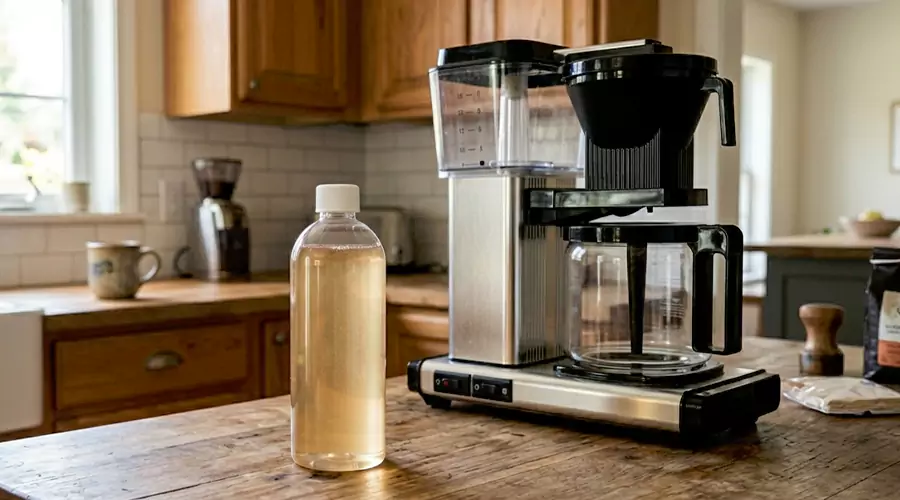
Coffee machine descaler contains mild acids that dissolve mineral deposits inside coffee makers and espresso machines. Most formulas use citric acid or lactic acid with water and stabilizing ingredients. These ingredients break down calcium and magnesium left by hard water.
Many people ask what is in coffee descaler because they want to protect their appliance and avoid chemical taste in coffee. A good descaler removes scale inside the water path without scratching tubes or damaging heating parts when used as directed.
Quick Answer
A coffee maker descaling solution usually contains mild food grade acids with water and formula support ingredients. The acid dissolves mineral scale while the liquid carries loosened buildup out during the rinse cycle.
Common acids include citric acid and lactic acid. Some formulas use sulfamic acid for stronger scale removal in machines that allow it.
Common Descaler Ingredients
The main descaler ingredients are designed to dissolve scale without damaging internal parts when used correctly.
| Ingredient Type | Common Example | What It Does |
|---|---|---|
| Mild acid | Citric acid | Breaks down mineral scale |
| Organic acid | Lactic acid | Helps dissolve calcium deposits |
| Cleaning agent | Nonabrasive additive | Supports residue removal |
| Water base | Purified water | Dilutes the formula for safe use |
| Stabilizer | Formula support ingredient | Keeps the solution consistent |
| Fragrance free formula | No scent added | Helps avoid taste transfer |
Why Coffee Machines Need Descaling?
Regular coffee machine cleaning removes residue that affects flavor and flow. Descaling handles the mineral buildup that forms when heated water leaves calcium and magnesium behind.
Hard water creates scale faster than filtered water. Heavy scale slows brewing and forces the pump to push water through a restricted path.
Coffee Maker Limescale Removal
Routine coffee maker limescale removal protects the water path inside the appliance. Scale collects around heating areas and inside narrow tubing where normal rinsing does not reach.
A machine with heavy buildup brews slower and delivers weaker coffee. In severe cases the machine stops pushing water through the brew head.
Citric Acid in Coffee Descaler
A citric acid descaler works well for many drip coffee makers and kettles. Citric acid reacts with mineral deposits and helps loosen scale from internal surfaces.
High end espresso machines need extra care. Always follow the owner’s manual because some machines require a specific formula for boilers and seals.
What Descaling Solution Ingredients Do?
The purpose of descaling solution ingredients is to loosen hardened scale inside the water system. Mild acids react with mineral deposits and break the buildup into smaller residue.
The rinse cycle carries dissolved minerals out through the machine. Clean water cycles then remove leftover solution before the next brew.
Coffee Machine Scale Buildup
Coffee machine scale buildup happens when minerals in water collect on hot surfaces.
Signs of Scale Buildup
- Coffee brews slower than usual.
- Water flow becomes uneven.
- The machine makes louder sounds during brewing.
- Coffee tastes flat or bitter.
- The machine displays a descale alert.
How Descaling Coffee Machine Products Work?
Descaling coffee machine products work by moving an acidic solution through the same path water uses during brewing. The solution touches the internal surfaces where scale forms.
After the solution sits and circulates the deposits loosen. A clean water rinse removes the loosened minerals and clears the water path.
Coffee Maker Cleaning Solution vs Descaler
A coffee maker cleaning solution removes coffee oils stains and residue. A descaler removes mineral deposits caused by heated water.
Some products clean and descale in one cycle. Read the label because many products focus on one job only.
Remove Mineral Buildup Coffee Maker Safely
To remove mineral buildup coffee maker problems safely follow the machine manual and product label. Add the correct amount of solution to the reservoir before starting the descale cycle.
Run the full cycle if the machine has a descale setting. Rinse the tank and brew clean water cycles until the smell and taste are gone.
Safe Descaling Steps
- Turn off the machine before adding solution.
- Use the correct mixture ratio.
- Run the full descale cycle.
- Rinse the water reservoir carefully.
- Brew clean water cycles before making coffee.
Safe Coffee Descaler Tips
A safe coffee descaler is made for coffee appliances and used only as directed. Never mix descaler with bleach drain cleaner or other chemicals.
Strong household acids can damage seals tubing and metal parts. A full rinse protects flavor and keeps residue out of the next cup.
Coffee Appliance Cleaning
Good coffee appliance cleaning includes the parts you can see and the water path you cannot see. Wash removable parts and rinse the water tank before residue hardens.
Coffee oils build up in baskets carafes brew heads and drip trays. Cleaning these parts keeps flavor clean and helps the machine brew at a steady pace.
Coffee Machine Maintenance
Regular coffee machine maintenance keeps the appliance working longer. Descale based on water hardness and how often the machine brews.
Daily users need service more often than occasional users. Machines with descale alerts give a useful reminder but hard water still requires attention before the alert appears.
Coffee Machine Care Tips
Practical coffee machine cleaning tips help prevent buildup before the machine slows down.
Easy Care Habits
- Use fresh water for each brew.
- Empty the drip tray regularly.
- Wash removable parts after use.
- Descale before flow becomes weak.
- Keep the machine dry between uses.
Coffee Maker Repair Prevention
Routine descaling supports coffee maker repair prevention because scale adds stress to pumps heaters and valves. A clogged water path makes the appliance work harder than normal.
Hire a professional when the machine still runs poorly after descaling. The best service for repeat flow problems includes testing the pump heater thermostat and internal tubing.
Appliance Descaling Guide
A useful appliance descaling guide starts with product compatibility. Coffee makers kettles humidifiers and espresso machines do not always use the same cleaning formula.
Use coffee specific descaler for coffee appliances. Never assume one cleaner belongs in every appliance because seals metals and water paths vary.
How Often Should You Descale?
Most coffee makers need descaling every 1 to 3 months with heavy use. Hard water homes need descaling more often because mineral deposits form faster.
Filtered water homes can use a longer schedule. The right timing depends on water quality machine type and brewing volume.
Final Thoughts
Coffee descaler usually contains mild acids that dissolve mineral scale inside the appliance. Citric acid lactic acid water and stabilizers are common parts of many formulas.
Regular descaling protects water flow brewing temperature flavor and appliance life. Use a product made for your machine and rinse fully before brewing the next cup.